Hello Kittys ♡
Welcome to my kitchen, where cooking is soft, comforting, and accessible to everyone.
Looking for an easy bibimbap recipe you can make at home? This cozy Korean dish is colorful, nourishing, and endlessly customizable. Today, I’m sharing my dreamy homemade bibimbap, inspired by Korean comfort food but adapted for everyday cooking — simple, aesthetic, and beginner-friendly.
What Is Bibimbap?
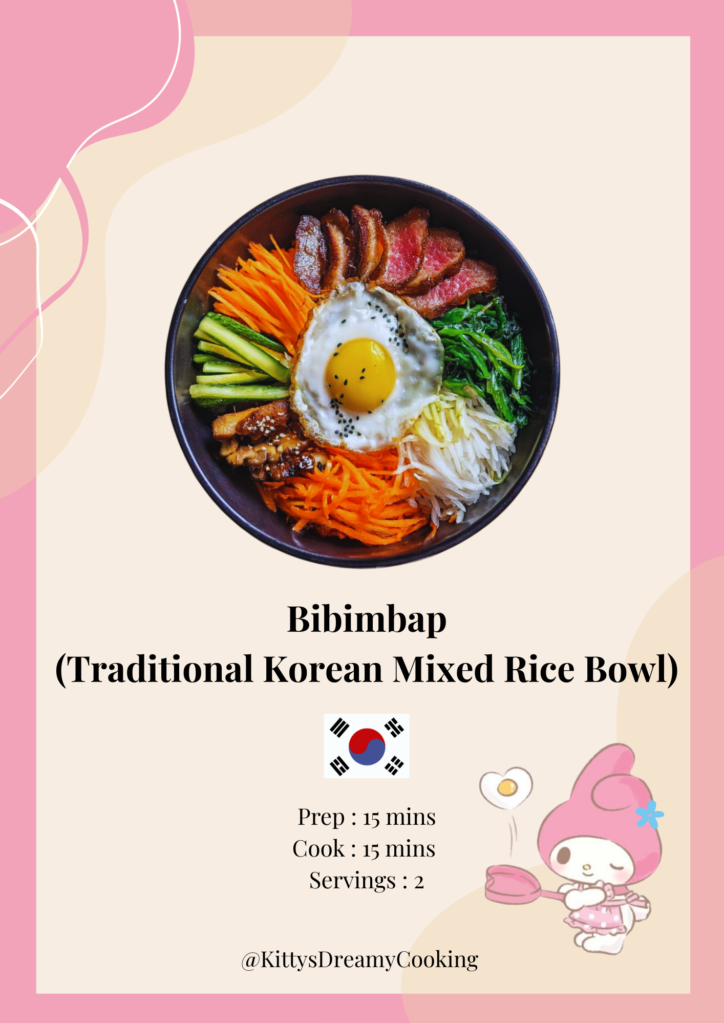
Bibimbap is a traditional Korean rice bowl made with warm rice, assorted vegetables, protein, a fried egg, and gochujang sauce. The name literally means “mixed rice”, and that’s exactly how it’s enjoyed — everything stirred together into one delicious bowl.
What makes bibimbap special is its balance:
• warm & fresh
• savory & slightly sweet
• spicy & comforting
𐙚 This is a short recipe for the bibimbap, but below these pins, you can find a full, explained recipe just for you!

♡ Now, let’s make Bibimbap Kitty’s !
- Prep time : 15 mins
- Cook time : 15 mins
- Servings : 2
The Ingredients for Homemade Bibimbap :
𐙚 Rice :
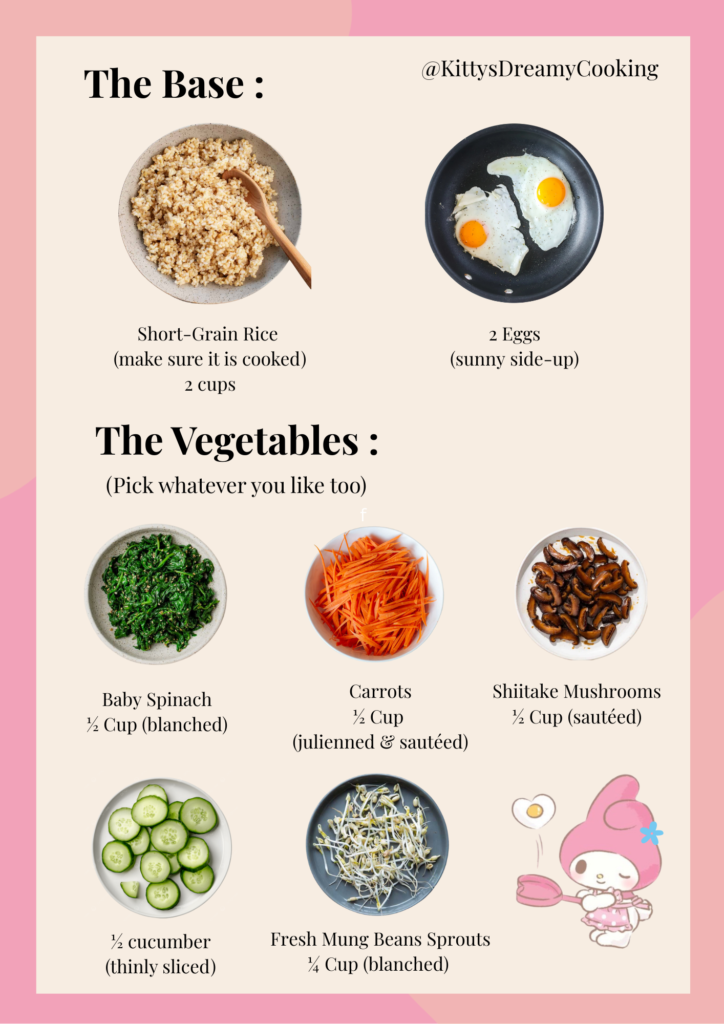
• Short-grain rice – 2 cups (cooked)
Short-grain rice works best for an authentic Korean bibimbap texture.
𐙚 Vegetables :
(Feel free to customize — this easy bibimbap recipe is very flexible.)
• 2 eggs (sunny side-up)
• Baby spinach – ½ cup (blanched)
• Carrots – ½ cup (julienned & sautéed)
• Shiitake mushrooms – ½ cup (sautéed)
• ½ cucumber (thinly sliced)
• Fresh mung bean sprouts – ¼ cup (blanched)
𐙚 Protein :
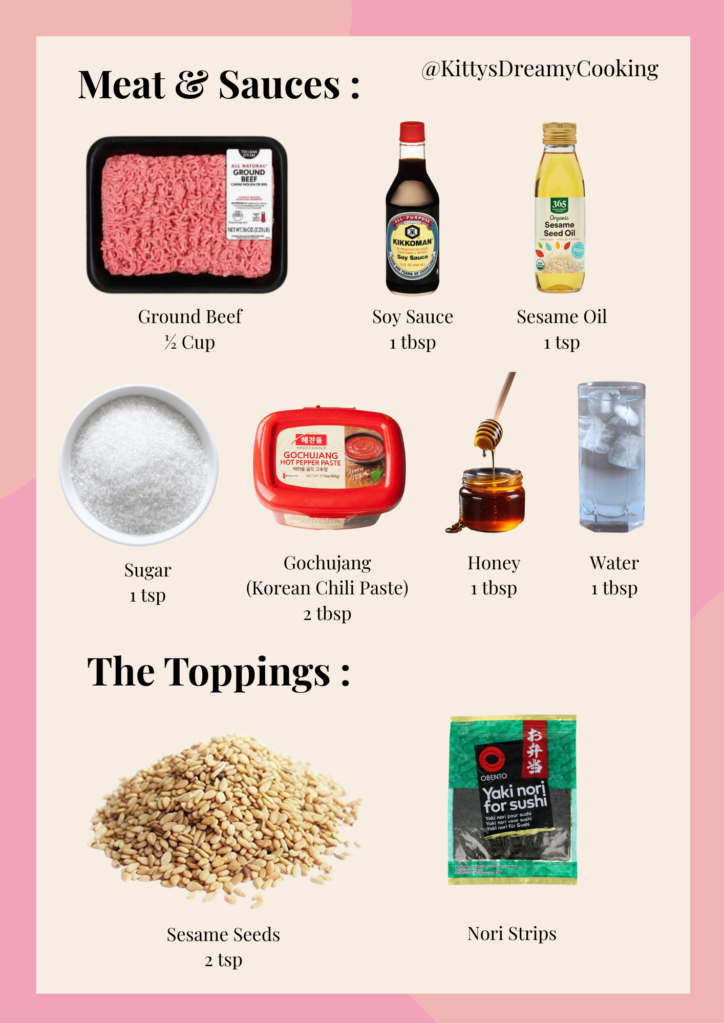
• Ground beef – ½ cup
• Soy sauce – 1 tbsp
• Sesame oil – 1 tsp
• Sugar – 1 tsp
(You can replace beef with tofu for a vegetarian bibimbap.)
𐙚 Gochujang Sauce:
• Gochujang (Korean chili paste) – 2 tbsp
• Honey – 1 tbsp
• Water – 1 tbsp
Mix until smooth and glossy.
𐙚 Toppings :
• Yaki nori / sushi nori (cut into thin strips)
• Sesame seeds – 2 tsp
How to Make Bibimbap (Step-by-Step) :
♡ Step 1 – Cook the protein :
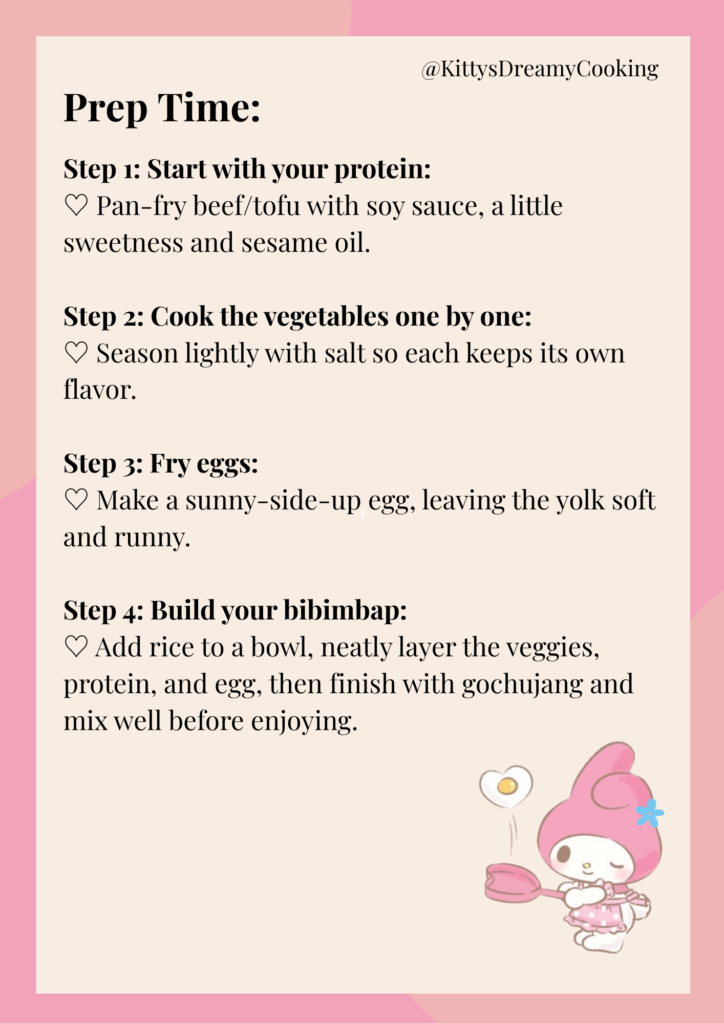
Heat a pan over medium heat. Add the ground beef, soy sauce, sugar, and sesame oil.
Cook until browned and fragrant. Set aside.
♡ Step 2 – Prepare the vegetables :
Cook each vegetable separately with a small amount of oil and a pinch of salt.
This helps keep each ingredient’s natural flavor, which is essential for authentic bibimbap.
• Blanch spinach and bean sprouts briefly, then drain well
• Sauté carrots and mushrooms until tender
• Keep cucumber fresh for crunch
♡ Step 3 – Fry the eggs :
Cook eggs sunny side-up, keeping the yolk soft and runny.
This adds richness to the bibimbap bowl.
♡ Step 4 – Assemble the bibimbap :
In a bowl:
1. Add warm rice at the bottom
2. Arrange vegetables neatly on top
3. Add the cooked protein
4. Place the fried egg in the center
5. Spoon over the gochujang sauce
6. Finish with sesame seeds and nori strips
Mix everything together before eating and enjoy!
♡ Tips for the Best Bibimbap at Home :
• Always use warm rice
• Season vegetables lightly
• Adjust gochujang to your spice level
• Don’t skip the sesame oil — it adds depth and aroma
Is Bibimbap Healthy?
Yes! Bibimbap is naturally balanced with:
• carbohydrates from rice
• protein from beef or tofu
• fiber and vitamins from vegetables
It’s a nourishing and satisfying Korean meal.
This easy homemade bibimbap recipe is perfect for lunch or dinner and can be adapted endlessly. If you love Korean comfort food, aesthetic recipes, and simple cooking, you’ll feel right at home here 🇰🇷
Thank you for cooking with me Kittys 🌸